
se do porto cathedral
When you first see the Cathedral of Se do Porto from close up you might not realize it’s hidden beauty and amazing views from the top of the tower.
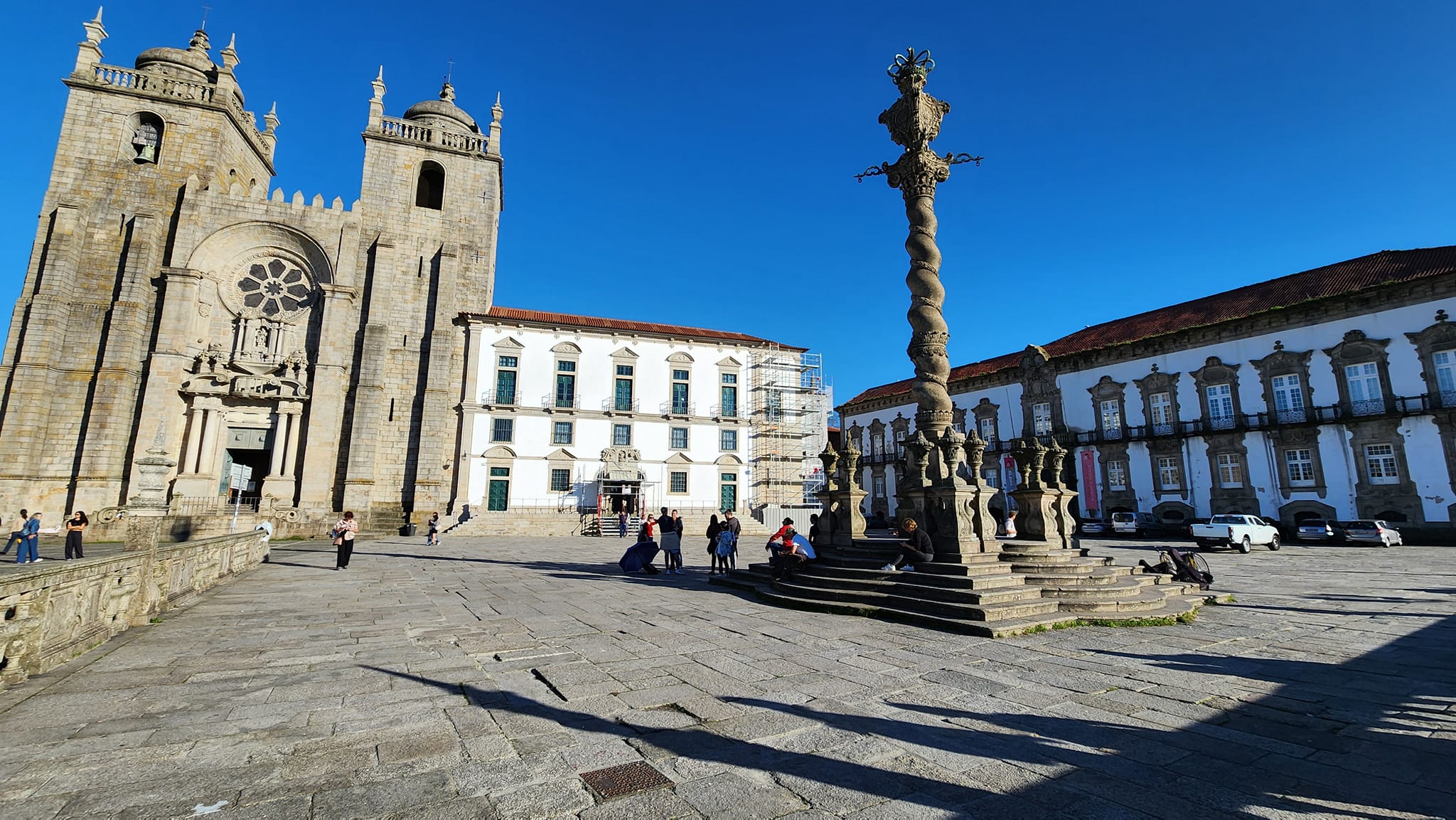
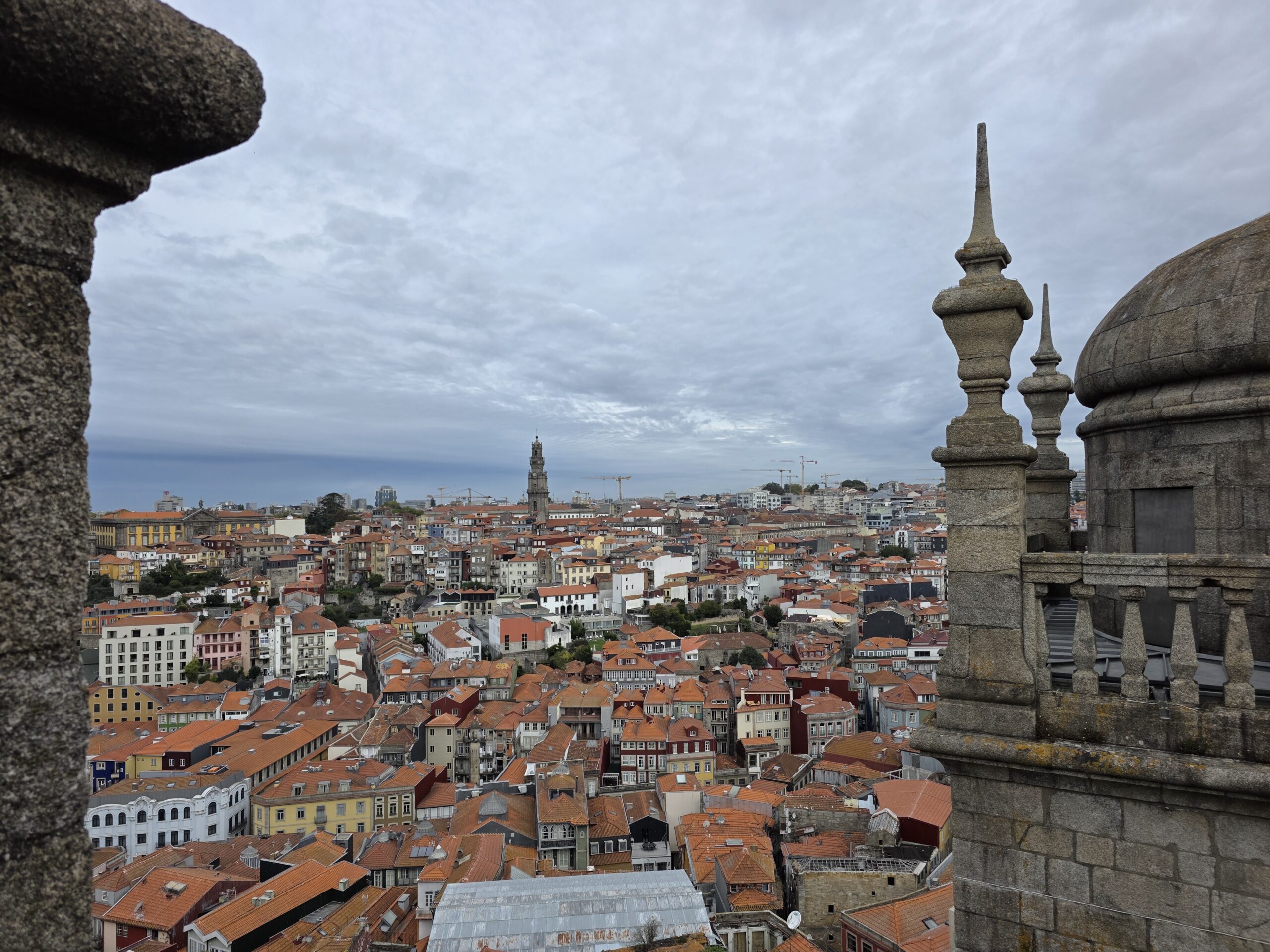
In comparison to other European cathedrals, Se de Porto looks extremely modest at first glance. This is mainly due to its Romanesque architecture at the top of an already impressive city view. However, a short walk into its cloister, and a climb to the top of one of its towers will make most people change their opinion quickly. The Cathedral is truly a work of art and history.
Se de Porto is built on the site of a chapel which existed prior to 1108. As with many of these ancient buildings, the construction work was not an overnight job, and it was prolonged over 400 years until the 16th Century. Ever since different projects continued all the way until the 20th Century, including many Baroque architecture additions during the 17th century.
The cathedral is one of the first Portuguese buildings to use flying buttresses to support its central nave. It is primarily Romanesque but has had various renovations, including Baroque and Gothic elements.
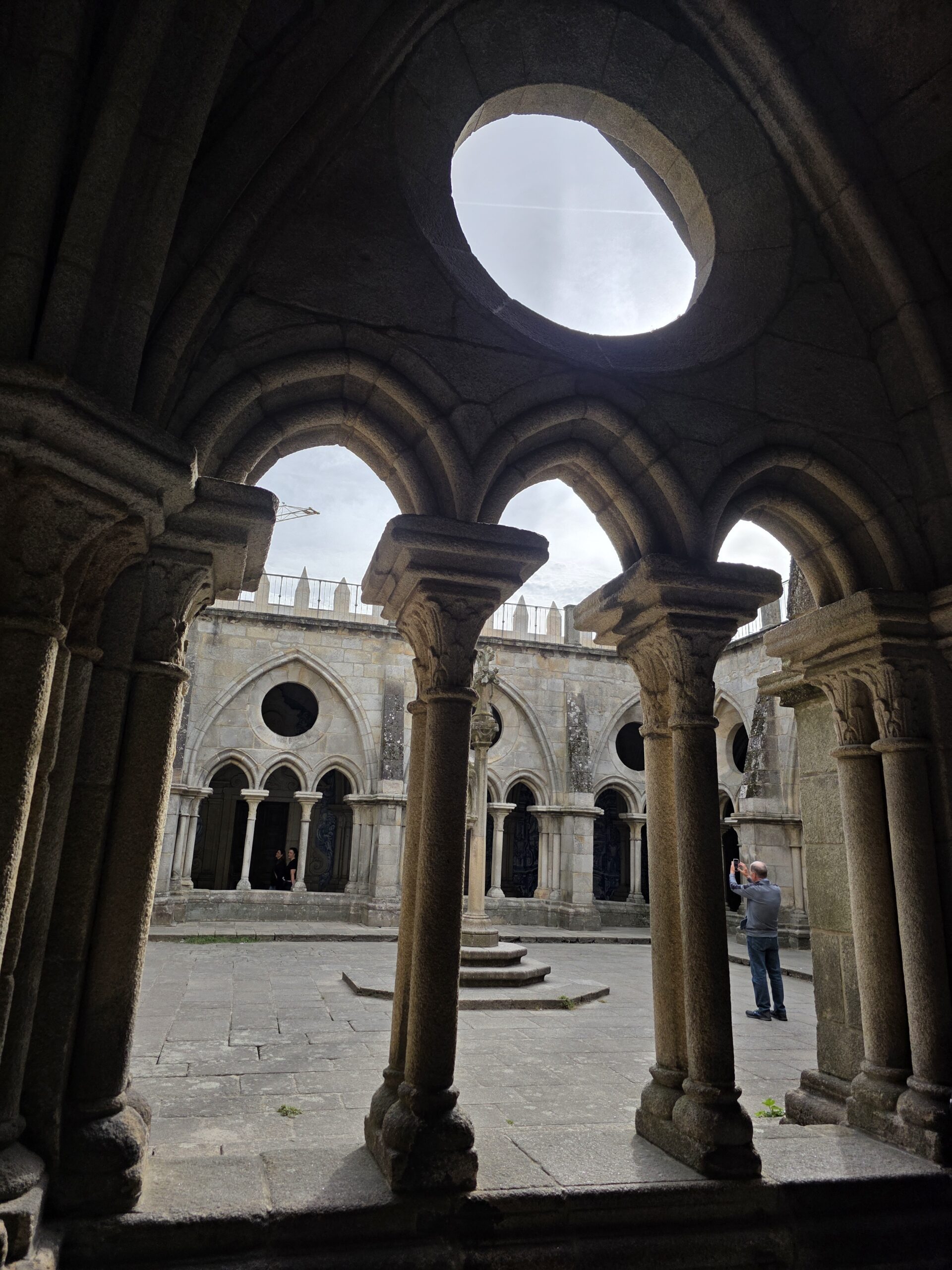
Entering the Cathedral the visitor will pass into the Cloister. A walk around its covered corridors will discover detailed stories painted on “azulejo” tiles from the “Song of Songs”. The poem narrates an intense, poetic love story between a woman and her lover through a series of dialogues, dreams, metaphors, and warnings to the “daughters of Jerusalem” not to awaken love before its time. Work is Baroque from 1729-1731. The Baroque columns were included in the 17th century by Nicolau Nasoni (Italy) who worked frequently on many other Portuguese buildings at the time (such as the Tower of “Clerigos”).
Other amazing things to see include the Sacristy with ceiling paintings from 1727; the St. Vincent Chapel and its wall organ; the Central Nave which includes a beautiful Romanesque rose window, and 59 feet / 18 meter high ceiling and a structure started back in the 11th Century.
Visitors with energies left should climb up to the top of the Tower to be able to observe the whole city of Porto, the Douro River and Vila Nova de Gaia.